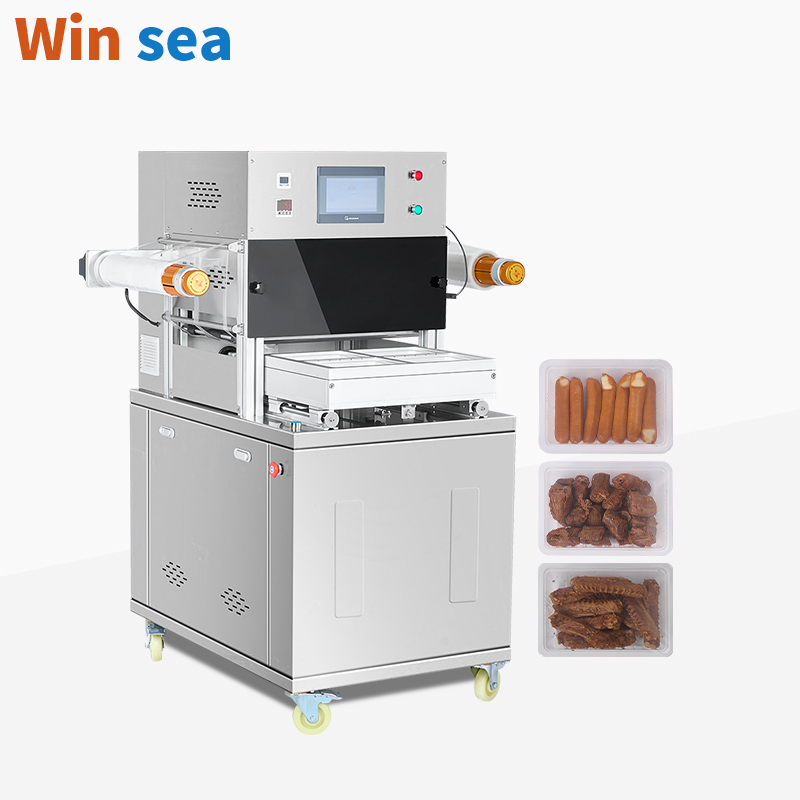
Scaling packaging operations introduces a critical capital expenditure risk. You face a crucial business decision today. Investing in the wrong level of automation can create permanent operational bottlenecks. It can also trap your working capital in rigid, over-engineered machinery. The goal is never simply buying the fastest machine available on the market. Instead, you must identify the exact intersection of your daily throughput needs, available labor, and product mix complexity.
If you miscalculate these variables, your profit margins will shrink quickly. If you get it right, you unlock highly scalable growth. This article provides a strictly objective, data-backed comparison between automatic and semi-automatic systems. We will evaluate long-term financial impacts, operational flexibility, and actual factory-floor realities. You will learn exactly how to match machine capabilities with your unique production demands. By the end, you will know which system protects your cash flow and scales your daily output effectively.
Key Takeaways
The "Speed" Myth: An automatic vacuum packing machine does not necessarily execute a single vacuum cycle faster than a semi-automatic one; its primary advantage is eliminating human fatigue and achieving zero-variance output over continuous 8-hour shifts.
The TCO Reality: While automatic systems require a capital investment up to 3–4 times higher, they can reduce labor costs by up to 75%, fundamentally shifting the 5-year ROI equation for high-volume facilities.
The Flexibility Trade-off: Semi-automatic machines allow for 5-to-15-minute changeovers and immediate operator quality control, whereas automatic systems demand rigid programming, metal tooling, and strict safety shutdowns that penalize process variations.
The Volume Threshold: Operations packaging under 3,000 units daily typically maximize ROI with semi-automatic machines; facilities exceeding 10,000 identical units daily necessitate full automation.
Defining the Automation Tiers: Intervention vs. Output
Packaging equipment falls into distinct operational tiers. We must define the line between human intervention and pure machine output. Many buyers misunderstand what automation actually replaces on the factory floor.
Semi-Automatic Machine Mechanics
The operator acts as the primary driver in a semi-automatic setup. They manually load the product into the chamber. They align the bag or film carefully to prevent wrinkles. Finally, they initiate the sealing process by pressing a button or closing a lid. The vacuum packing machine only manages the vacuum extraction and heat-seal execution.
You rely entirely on human dexterity here. Operators control the operational pace. Output peaks at medium volumes. You can expect roughly 1,000 to 5,000 units per shift. Production speeds will fluctuate. Human fatigue sets in naturally during long hours, causing minor delays between cycles.
Automatic Machine Mechanics
In a fully automated setup, the machine takes over completely. The equipment handles product feeding, film unwinding, vacuuming, sealing, and discharge. Human intervention drops significantly. Operators mostly replenish film consumables or monitor diagnostic error codes on a digital screen.
The machine drives the workflow relentlessly. An automatic vacuum packing machine runs continuously without pausing to rest. It handles 10,000 to 25,000 units daily. Zero physical fatigue means cycle times remain perfectly consistent across a full 24/7 schedule.
Head-to-Head: 5-Year Financial and Operational Impact
You must look far beyond the initial sticker price. Five-year financial modeling reveals a completely different reality. Long-term costs dictate your true return on investment.
Initial Capital Expenditure (CapEx)
Entry-level semi-automatic models remain highly accessible. Small facilities can buy them outright without securing heavy financing. They require standard electrical outlets and occupy minimal floor space. Fully automatic systems require massive upfront capital. You pay a premium for integrated conveyors, optical sensors, and complex pneumatics. You also face installation costs and specialized facility wiring requirements.
Labor Offsets and Operator Utilization
Labor costs change the long-term financial equation entirely. Let us model a typical production shift. Semi-automatic setups demand a dedicated operator. They require a strict 1:1 operator-to-machine ratio. Two machines require two full-time employees drawing full salaries.
Automatic systems operate differently. They often allow a highly efficient 0.5 ratio. One skilled technician can comfortably manage two or more lines simultaneously. Over five years, compounded annual salary savings become massive. These labor offsets easily justify the high initial capital expenditure for high-volume facilities.
Consumables and Tooling Costs
Recurring daily expenses eat into profit margins quietly. We see major differences in tooling types between these two tiers.
Mold Differences: Semi-automatic machines use flexible, cheaper molds. You can swap them out quickly. Automatic machines require specially engineered metal molds. They also use complex rotary cutting tools. These heavy-duty parts boast longer lifespans. However, they carry high replacement costs and complex installation protocols.
Material Waste: Film yield matters immensely over time. Automatic optical sensors optimize film yield aggressively. They precisely measure every cut. They reduce the scrap rates caused by human misalignment. You save thousands of dollars on plastic rolls annually.
Financial / Operational Metric | Semi-Automatic System | Automatic System |
|---|
Initial CapEx | Low to Moderate | Very High (Financing usually required) |
Labor Ratio | 1:1 (One operator per machine) | 0.5 (One technician for multiple lines) |
Tooling Cost | Low (Simple, flexible molds) | High (Engineered metal tooling) |
Material Yield | Average (Prone to human misalignment) | Excellent (Optimized by optical sensors) |
The Hidden Realities: Flexibility, Safety, and Quality Control
Financial spreadsheets rarely capture daily floor realities perfectly. Agility and safety protocols dictate daily production success. You must evaluate how these machines handle real-world disruptions.
SKU Complexity and Changeover Times
We call this the agility factor. Semi-automatic systems offer a massive advantage here. They seamlessly adapt to multiple product sizes. Manual physical adjustments take just 5 to 15 minutes. This rapid turnaround makes them ideal for high-mix, low-volume (HMLV) environments. You can run coffee beans in the morning and beef jerky in the afternoon.
Automatic systems face a strict operational constraint. Tooling swaps and software reprogramming take 30 to 60 minutes. Frequent changeovers destroy operational efficiency. Short production runs waste valuable uptime. You lose money every minute the machine sits idle for a physical part swap.
Safety Protocols and Fault Tolerance
Quality control looks very different across these tiers. Semi-automatic setups allow incredible flexibility during operation. An operator can spot a misaligned label instantly. They can flatten an overlapping bag right away. They correct minor errors without stopping the core machine cycle.
Automatic systems lack human nuance entirely. Safety and compliance rules are strict. Any jammed film or sensor error triggers a hard emergency stop. The entire line drops to zero speed immediately. You experience complete line downtime. Production remains frozen until a qualified technician clears the fault and resets the logic controller.
Decision Framework: Which Equipment Fits Your Floor?
We can distill this complex choice into clear operational rules. Use this straightforward framework to guide your next equipment purchase.
Choose Semi-Automatic If:
Your daily production volume fluctuates wildly month to month.
Your daily output sits comfortably below the 3,000 to 5,000 unit threshold.
Your product mix features multiple pouch sizes and varied packaging materials.
You frequently package small-batch seasonal specialty items.
Your current facility footprint remains highly limited.
Your available electrical infrastructure cannot support heavy industrial loads.
Choose Automatic If:
You consistently process over 10,000 identical SKUs every single day.
Labor shortages actively bottleneck your fulfillment operations.
High employee turnover disrupts your standard production schedule regularly.
Product standardization is a strict requirement for your major retail buyers.
You require absolute zero-variance traceability across all outgoing batches.
The Hybrid Automation Strategy: The 80/20 Deployment
You do not have to choose an all-or-nothing approach. A hybrid strategy mitigates capital risk beautifully. Progressive facilities mix both tiers to maximize output.
Risk Mitigation Strategy
We strongly advise against rushing into full automation blindly. Do not automate your entire floor if your catalog is diverse. Full automation removes your ability to pivot quickly. A hybrid approach protects your operational agility while reducing daily labor costs.
Implementation Logic
Identify your "hero" SKUs first. These are the top 20% of your products. They generate 80% of your consistent daily volume. Deploy a dedicated automatic line solely for these specific items. Let the machinery run continuously. Avoid disruptive changeovers entirely on this main line.
Complementary Assets
Retain your cost-effective semi-automatic units. Purchase additional manual units if necessary. Use them to handle the remaining 80% of your diverse catalog. They excel at low-volume items. They easily handle seasonal SKUs. This strategy prevents costly changeovers on the main automated line. It maintains ultimate fulfillment agility across your entire operation.
Conclusion
Upgrading your packaging equipment requires careful operational math. You must balance upfront capital against long-term labor savings. Semi-automatic machinery protects your business agility and preserves your cash flow. Fully automated equipment buys you relentless consistency and massive scale.
Take these actionable next steps before making a final purchase:
Audit your current daily labor costs precisely.
Calculate your exact daily SKU changeover frequency.
Request a verifiable five-year financial projection from the equipment manufacturer.
Evaluate your current facility power constraints and floor space.
Never purchase industrial equipment based on speed specifications alone. Match the machine capabilities directly to your actual factory-floor realities.
FAQ
Q: Does an automatic vacuum packing machine run faster than a semi-automatic one?
A: Not necessarily per cycle. The core vacuum and sealing physics take the exact same time. Automatic machines are faster because they eliminate operator handling time between cycles. They also do not suffer from human fatigue over an 8-hour shift.
Q: What are the maintenance differences between the two?
A: Semi-automatic machines use simpler components. This means more frequent but cheaper, operator-level repairs. Automatic systems are built for long, uninterrupted runs. However, they require highly trained technicians and expensive specialized parts when preventative maintenance is finally due.
Q: Can automatic and semi-automatic machines use the same film rolls?
A: Often, they cannot. Fully automated systems generally require specific roll widths. They need precise material specs to facilitate automatic feeding and cutting mechanisms. Semi-automatic machines are far more forgiving. They easily accept varied, cheaper, or precut packaging materials.