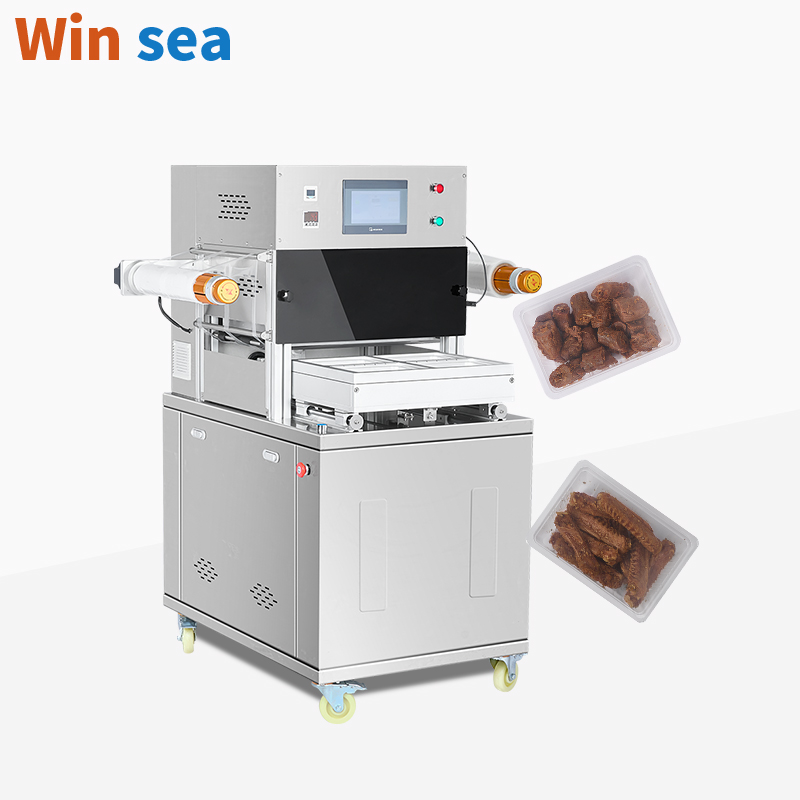
Have you ever attempted to seal soups, stews, or a rich marinade with a standard external vacuum sealer? You likely experienced pure frustration. The machine aggressively sucks liquid out of the bag. You end up with compromised seals, wet plastic, and a sticky mess spreading across your countertops.
Enter the chamber vacuum packing machine. It stands as the ultimate commercial-grade solution for this exact problem. Instead of relying on direct suction from the bag opening, it uses pressure equalization. This distinct scientific approach makes it the definitive choice for handling wet ingredients perfectly.
This evaluation guide helps buyers navigate the bottom of the funnel. We will determine if the high upfront cost, heavy weight, and large footprint of these units make sense for you. You will discover how liquid-handling capabilities, dramatically lower consumable costs, and superior vacuum strength easily justify the upgrade.
Key Takeaways
Liquid-Friendly Physics: Chamber machines equalize pressure inside and outside the pouch, ensuring liquids stay in the bag rather than being drawn into the pump.
Superior Vacuum Strength: Oil-lubricated chamber pumps can achieve up to 99.8% air removal (approx. 28–29 inHg), compared to the 80% typical of external sealers.
Long-Term ROI: Chamber machines use inexpensive flat bags (averaging $0.08/bag) instead of costly embossed bags ($0.35/bag), often offsetting the initial machine cost for high-volume users.
Space & Weight Trade-offs: Commercial-grade chamber sealers regularly weigh between 70 and 100 lbs and require significant dedicated counter space or a separate cart.
The Physics of Sealing Liquids: Why External Machines Fail Where Chamber Machines Succeed
Understanding the mechanics behind vacuum sealing reveals why some machines struggle. You must look at how they interact with atmospheric pressure.
The External Sealer Flaw
External models pull a vacuum directly from the bag opening. You place the edge of the pouch onto a small suction channel. The motor kicks on and draws air out. This works fine for dry goods. However, it fails completely when you introduce moisture. When sealing liquids or heavily wet foods like fresh meat or marinades, the suction acts like a straw. It inevitably draws moisture up into the seal zone.
Once liquid crosses the heat bar, it ruins the seal. The heating element cannot melt wet plastic together properly. Air eventually leaks back in. Worse, liquids can get sucked directly into the internal pump. This causes permanent motor damage and voids warranties.
The Chamber Pressure Equalization Principle
A vacuum packing machine built with an enclosed chamber operates differently. It relies on volume evacuation. You place the entire bag inside the machine and close the lid. The pump extracts air from the entire chamber at once. Because the air leaves the space inside the bag and outside the bag simultaneously, the pressure remains completely equal.
This equalization means liquids stay perfectly still. They do not rise or bubble up toward the opening. The bag simply sits there, undisturbed. Once the desired vacuum level is reached, the sealing bar closes. Finally, the machine allows ambient air back into the chamber. This returning air instantly compresses the bag tightly around the food.
The "Boiling" Phenomenon
Physics dictates that the boiling point of liquids drops inside a high vacuum. As the pressure decreases inside the chamber, water can boil at room temperature. Cold soups or marinades will suddenly bubble vigorously. Advanced machines allow users to monitor the cycle closely. You can program the machine to seal exactly before cold liquids begin to boil over. This precise control ensures a perfect, mess-free seal without losing any product volume.
Beyond Liquids: High-Demand Use Cases for a Chamber Vacuum Packing Machine
Handling liquids is the primary draw. However, these robust machines unlock several other high-level culinary and processing applications.
High-Volume Processing (Hunting & Fishing)
Hunters and anglers process large yields of meat at once. External sealers struggle with continuous work. They frequently trigger thermal shutdowns to prevent overheating. You often wait five minutes between seals. Chamber machines feature commercial-grade components designed for heavy duty. They provide capacity for back-to-back continuous sealing without thermal shutdown. You can process fifty pounds of venison or salmon in one rapid session. You never face those frustrating "cool down" periods.
Rapid Marinating and Infusions
Professional kitchens use these units as flavor engines. The intense vacuum environment physically alters cellular structures. It opens the microscopic pores of meats, fruits, and vegetables. When you run a vacuum cycle, it pulls trapped air out of the food tissue. As the air returns to the chamber, it forces your liquid marinade deep into those open pores. This allows rich marinades to penetrate fully in minutes rather than hours.
Precision Sous Vide
Sous vide cooking demands perfection. You cook proteins in warm water baths for hours. A 99%+ air-free environment prevents bags from floating. If a bag floats, the food cooks unevenly. It can even slip into the danger zone for bacterial growth. High-temperature sous vide cooks require absolute zero air in the pouch. A chamber machine easily extracts enough air to keep heavy briskets securely anchored underwater.
Mason Jar Sealing
Dry storage enthusiasts also benefit greatly. Most chamber machines offer sufficient vertical clearance. They easily accommodate half-pint or pint Mason jars directly inside the tub. You just place the lid loosely on the jar, put it in the chamber, and run the cycle. You can seal dry goods, dehydrated fruits, or hearty broths effortlessly. You never need clunky external hose attachments.
The Financial ROI: Upfront Costs vs. Consumable Savings
Many consumers balk at the initial price tag. However, smart buyers look at the ongoing operational expenses to justify the purchase.
The Consumable Cost Gap
We must analyze the bag expenses. External sealers require proprietary textured or embossed bags. The machine needs these micro-channels to suck the air out. These specialty bags cost a premium, typically ranging from $0.30 to $0.35 per bag. Chamber machines do not need air channels. They use standard commercial flat bags. These simple, smooth pouches cost merely $0.06 to $0.08 per bag. The price gap is staggering.
Break-Even Calculation
Let us frame a realistic scenario for a heavy user.
Assume a household or small business uses 20 bags a week.
With an external sealer, 20 bags cost about $7.00.
With a chamber unit, 20 flat bags cost about $1.60.
You save $5.40 every single week.
Over a year, the savings on bags alone can amount to $200 to $300. If you buy a commercial unit for $600 to $800, the machine pays for itself in two to three years. After that break-even point, you actively save money on every single package.
Cost Comparison Chart: External vs. Chamber Bags
Usage Level | Bags Per Week | Annual Cost (Embossed @ $0.35) | Annual Cost (Flat @ $0.08) | Annual Savings |
|---|
Casual Home Use | 5 | $91.00 | $20.80 | $70.20 |
Active Batch Prep | 20 | $364.00 | $83.20 | $280.80 |
Hunters/Small Biz | 50 | $910.00 | $208.00 | $702.00 |
Appraising Build Quality (The "Buy It For Life" Factor)
You also pay for longevity. Consider the construction materials. Retail external sealers rely heavily on plastic housing, plastic hinges, and small, overworked dry motors. They often break after two years of moderate use. Chamber models feature thick stainless steel construction. They house heavy-duty, industrial-grade pumps. They represent a true "Buy It For Life" asset for your kitchen.
Technical Evaluation: Specifying the Right Chamber Machine for Your Needs
Selecting the right model requires matching technical specifications to your actual cooking habits.
Assess your frequency: Do you seal daily or just once a month?
Measure your portions: Are you freezing single chicken breasts or entire racks of ribs?
Check your space: Do you have permanent counter space available?
Pump Type: Oil-Lubricated vs. Dry (Oil-Free) Pumps
The motor dictates performance, noise, and maintenance routines.
Oil-Lubricated Pumps
These units offer the absolute highest vacuum strength. They easily achieve up to 29 inHg, which equals roughly 99.8% air removal. They run incredibly quiet despite their immense power. They handle continuous commercial use without breaking a sweat. The trade-off? They require routine maintenance. You must perform periodic oil changes to keep the pump running smoothly.
Dry Pumps
Dry pumps appeal to users who hate maintenance. They do not require any fluid changes. They are generally lighter and easier to move. However, they peak at around 90% air removal. They also operate noticeably louder than their oil-bathed counterparts. We consider dry pumps best for casual home users.
Chamber Dimensions and Seal Bar Length
We advise buyers to measure their most common cuts of meat. You must also check typical liquid batch sizes. Do not buy a unit that cannot fit your favorite prep bowls. We recommend a minimum 10-to-11-inch seal bar for standard home use. This handles standard pint and quart bags easily. If you do batch-prepping or commercial processing, seek a 12-to-15-inch seal bar. A longer bar allows you to lay two smaller bags side-by-side per cycle.
Vertical Clearance
Buyers often forget about depth. Remind yourself to check the maximum internal height before purchasing. Do you intend to seal whole cuts like thick pork shoulders or large roasts? Will you use Mason jars inside the chamber? You must ensure the lid can close completely without crushing your ingredients.
Implementation Realities: Maintenance, Footprint, and Drawbacks
You must prepare for the physical realities of owning industrial equipment in a residential space.
The Weight Constraint
We must transparently address the biggest consumer complaint. A true commercial unit demands respect. It often weighs upwards of 80 to 100 lbs. You cannot simply slide it into a high cabinet after each use. We strongly advise planning a permanent placement strategy. You might need reinforced counters. Many users buy rolling utility carts. Others set up dedicated garage processing stations. Plan your footprint before the heavy box arrives at your door.
Oil Maintenance Truths
Let us demystify oil changes for rotary vane pumps. Many home cooks fear this step. Yes, it remains a required maintenance task. However, modern machines make it painless. They feature simple drain valves and clear viewing windows. You just drain the old fluid and pour in the new. Furthermore, you typically only need oil changes after hundreds of cycles. For most households, that means changing it once every 3 to 6 months of heavy use. If the oil looks clear through the window, you keep sealing.
Cycle Speed
You must set realistic expectations regarding speed. A full chamber vacuum cycle takes longer than a quick external seal. Evacuating a massive cubic volume of air requires time. Expect each cycle to take between 20 and 45 seconds. It might feel slow at first. However, the unmatched quality, pristine liquid handling, and reliability of the seal easily compensate for the time difference.
Conclusion
A chamber vacuum packing machine represents the ultimate, compromise-free solution for your kitchen. It masterfully packages messy liquids, wet foods, and handles high-volume processing without overheating. It operates on pressure equalization, leaving your countertops perfectly clean and your seals impenetrable.
Should you make the leap? If you seal liquids frequently, buy groceries in bulk, or process hunted game, the answer is a resounding yes. If you have the dedicated space, the massive consumable cost savings and elite performance make the upgrade mandatory. However, for those who only occasionally seal dry goods, this machine remains significant overkill.
Take the next step today. Evaluate your counter space, measure your typical portions, and compare specific pump types. Seek out top-rated models that match your exact capacity requirements. Stop wasting money on expensive bags and start preserving your food like a professional.
FAQ
Q: Can you vacuum seal hot liquids in a chamber machine?
A: No, you must chill liquids first. A high vacuum lowers the boiling point of liquids dramatically. If you put hot soup inside, it will boil instantly as the pressure drops. This causes severe messes, ruins the seal, and can damage internal components. Always cool stews and marinades to room temperature or colder.
Q: Do I need special bags for a chamber vacuum packing machine?
A: No, they use standard, inexpensive flat vacuum pouches. The machine extracts air from the entire chamber, so it does not need the micro-channels found on expensive embossed bags. This structural difference significantly reduces your long-term packaging costs.
Q: How often do I need to change the oil in a chamber vacuum sealer?
A: It entirely depends on your usage. Typically, you perform the first change after a 20-to-30-hour break-in period. After that, you change it every 3 to 6 months. Always check the sight window. If the oil appears cloudy or milky from absorbed moisture, change it immediately.
Q: What is a good vacuum strength (inHg) for a chamber sealer?
A: Commercial models should target 28 to 29 inHg. Perfect absolute vacuum is roughly 29.92 inHg. Hitting the 28–29 range ensures maximum air extraction, which is critical for extending shelf life, preventing freezer burn, and ensuring bags sink during sous vide cooking.