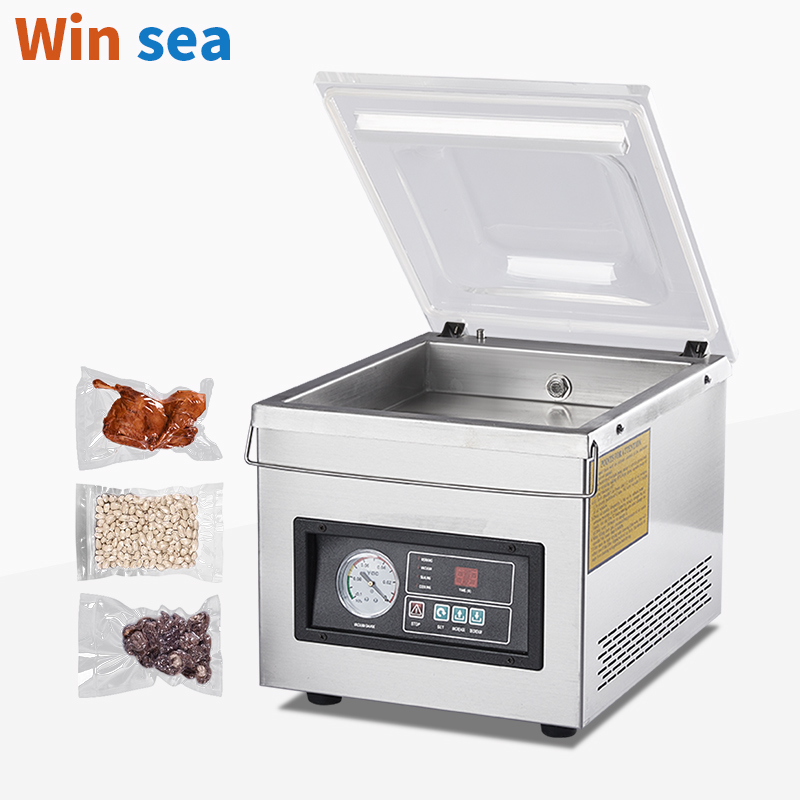
Standard packaging methods often fail precisely when you need them most. Spoilage, workflow bottlenecks, and failed liquid seals frustrate operators daily. Suction models often struggle to deliver consistent results in high-demand environments.
For commercial kitchens, serious home chefs, and field hunters, these limitations waste valuable time. They also ruin expensive, carefully prepared ingredients. You simply cannot afford to lose prime meat cuts or delicate sauces due to subpar packaging. These recurring failures highlight a critical business problem. Operators need a reliable system capable of securing liquids and scaling up production seamlessly.
Enter the chamber system. It serves as the definitive upgrade for flawless liquid handling, bulk processing, and advanced culinary techniques. We will strip away confusing marketing jargon. Our goal is to provide a technical, outcome-focused breakdown of how these machines operate. You will learn what specifications actually matter. We will also show you how to evaluate equipment based on your specific volume and daily use case.
Key Takeaways
True Vacuum Physics: Chamber machines lower pressure in the entire environment, preventing liquids from being sucked into the seal—a critical failure point in suction models.
ROI & Efficiency: Higher upfront costs are offset by significantly cheaper consumable bags, a 3–5x increase in shelf life, and prevention of freezer burn.
Culinary Versatility: Beyond preservation, chamber systems unlock modernist techniques like rapid infusion, cellular compression, and evaporative cooling.
Maintenance Reality: Peak performance requires strict maintenance, including routine synthetic/mineral oil changes and gasket inspections.
The Core Mechanism: How a Chamber Vacuum Sealer Actually Works
To understand why this equipment succeeds, we must look at the physics. Many people misunderstand how air extraction happens. They expect the pouch to shrink immediately as the pump runs. We call this the optical illusion of extraction.
During the vacuum cycle, the bag does not immediately shrink around the food. The pump removes ambient air from the entire enclosed space. Because pressure equalizes both inside and outside the bag, you see no physical compression during this phase. The food simply rests in a low-pressure environment.
A true commercial Vacuum Packing Machine operates using a precise sequence. We can break this down into a 3-step vacuum cycle:
Vacuum Extraction: The internal pump lowers ambient pressure. A standard machine might drop pressure from 150 mbars down to 50 mbars. This effectively removes 95% of the air inside the closed lid.
Thermal Sealing: Heated bars rise to fuse the plastic shut. This happens while the internal space remains depressurized. High-quality systems use dual-sealing cylinders. They create redundant heat lines for absolute leak prevention.
Aeration (Repressurization): A valve opens to let normal atmospheric pressure back in. The resulting pressure differential forcefully collapses the plastic tightly around the product.
Advanced models also include Soft Air technology. Soft Air introduces slow repressurization. This gradual air return prevents sharp bones from puncturing the plastic. It also stops heavy pressure from crushing fragile foods like delicate pastries or soft cheeses.
Chamber vs. Suction Sealers: Which Solves Your Bottleneck?
Buyers often struggle to choose the right equipment. Let us apply a skeptical, use-case-driven comparison to guide your shortlisting process. Both systems remove air, but they solve entirely different bottlenecks.
Suction/Edge Sealers (The Baseline)
Suction sealers clamp down on the edge of a pouch. They attempt to pull air directly out of the opening. They offer a very low initial cost. Their compact footprint makes them easy to store. They also allow for unlimited bag lengths.
However, they present severe drawbacks for serious users. They are fundamentally flawed for liquids. The pump draws fluids straight up into the seal zone. This requires tedious pre-freezing for soups and marinades. Furthermore, they demand expensive textured bags. Their vacuum strength often remains inconsistent across multiple cycles.
Chamber Vacuum Systems (The Upgrade)
Chamber models enclose the entire product. This eliminates directional suction. They offer effortless liquid handling. You can process soups and marinades quickly without freezing them first. They utilize cheaper flat or smooth bags. This improves long-term financial returns. They also ensure highly consistent, repeatable pressure levels.
They do have limitations. You face strict footprint and size constraints. You can only process items small enough to fit inside the lid. They carry heavy weight and demand a higher initial capital expenditure.
| Feature Category | Suction / Edge Sealer | Chamber Sealer |
|---|
| Liquid Handling | Poor. Liquids get pulled into the pump. | Excellent. Equalized pressure prevents spilling. |
| Consumable Cost | High. Requires specialized textured bags. | Low. Uses standard commercial smooth bags. |
| Vacuum Consistency | Variable. Decreases as the pump heats up. | High. Delivers precise, repeatable mbars. |
| Upfront Cost | Low. Budget-friendly for casual users. | High. Represents a capital investment. |
Beyond Food Preservation: Advanced Commercial and Culinary Applications
Operators must map hardware features to business outcomes. Justifying the investment in a Food Vacuum Packing Machine requires looking beyond basic storage.
Shelf Life & Waste Reduction
Proper air removal drastically reduces waste. It directly prevents freezer burn. Cold, dry freezer air dehydrates unprotected food surfaces. This dehydration turns expensive steaks into a tough, leather-like texture. Total oxygen exclusion halts this process. Operators routinely extend viability by 3 to 5 times over standard storage.
Modernist Culinary Techniques
Chefs use this equipment as an active cooking tool. It unlocks modernist techniques impossible to replicate by hand.
Infusions & Extractions: Extreme low pressure empties micro-air pockets in porous ingredients. Upon aeration, external liquids like oils or alcohols rush in. They instantly fill the empty cellular voids. You can create intense rosemary oils in seconds.
Compressions: Drastically dropping pressure alters cellular structures. Porous items like watermelon or cucumber collapse under the returning pressure. They turn translucent. Their texture becomes dense, meaty, and highly concentrated in flavor.
Evaporative Cooling: Lowering ambient pressure simultaneously drops the boiling point of water. Water inside the food begins to boil at room temperature. This rapid evaporation pulls heat away quickly. Chefs use this to flash-cool doughs or purees safely.
Myth-Busting Evidence
We must clarify a common myth. Vacuum sealing does not accelerate meat marination. Animal cell walls remain too rigid. They do not collapse under standard vacuum pressure. The meat does not absorb marinades any faster than it would sitting in a normal container. Acknowledging these objective limits builds better culinary practices.
Key Evaluation Criteria When Buying a Food Vacuum Packing Machine
You need a definitive buying framework. Do not rely on marketing promises. You must evaluate specific mechanical hardware.
Form Factor & Scalability
Size dictates your daily throughput. Tabletop units work best for light commercial tasks or serious home prep. They fit on standard stainless steel counters.
Floor-standing and double chamber models serve industrial needs. Swing-lid double chambers allow operators to load one side while the other runs. This parallel workflow doubles throughput for high-volume facilities.
Vacuum Pump Strength & Type
The pump serves as the engine. Dry pumps offer a lower duty cycle. They require no maintenance. However, they overheat during continuous runs.
Oil-lubricated pumps remain required for heavy use. They achieve much deeper pressure drops, sometimes hitting 5 mbars. The oil dissipates heat efficiently, allowing for non-stop packaging shifts.
Sealing Mechanisms
Look closely at how the heating elements work. Impulse sealing systems heat the wire only during the precise seal phase. This saves tremendous energy. It also reduces ambient heat inside the kitchen. Conversely, direct or continuous heating systems stay hot longer. They consume more power and wear out protective tapes faster.
Control Boards
Standardized kitchens need predictable outcomes. Digital control boards provide this consistency. Look for models offering customizable presets. You can program exact seconds for extraction and sealing. This ensures every staff member produces the exact same repeatable results.
Implementation Risks, Maintenance, and Safety Considerations
Buyers often ignore hidden operational realities. You must understand compliance rules and hardware upkeep to succeed.
Biological Safety Realities
An oxygen-free environment introduces new risks. It effectively suppresses aerobic bacteria. This stops mold growth. However, it creates prime conditions for dangerous anaerobic pathogens. Bacteria like Clostridium botulinum and Listeria thrive without oxygen.
You must pair sealed products with strict temperature control. Immediate refrigeration or freezing remains mandatory. Alternatively, you must apply thermal processing like Sous-vide cooking.
Consumables & Barrier Materials
Not all plastics block air equally. Thin bags let oxygen slowly seep back in. You must utilize high-barrier shrink materials. Standard PA/PE (Polyamide/Polyethylene) pouches work well for general use. EVOH barrier layers provide even better oxygen exclusion for long-term holds.
Routine Maintenance Requirements
You cannot neglect routine upkeep. Peak performance requires strict maintenance habits.
Oil Management: Oil-lubricated pumps demand high-quality mineral or synthetic oil. The oil provides crucial lubrication. It handles heat dissipation. It also ensures proper airtightness inside the pump block.
Consumable Replacement: Heat bars wear down. You must establish regular replacement schedules for Teflon tape. Exposed sealing wires will burn bags.
Gasket Inspections: The chamber lid relies on a rubber gasket. Inspect this seal weekly. Cracks or debris cause micro-leaks. A leaking lid prevents the pump from reaching maximum strength.
Conclusion
Upgrading your packaging workflow fundamentally changes how your kitchen operates. A heavy-duty chamber unit requires a higher upfront investment. It also demands strict maintenance habits. However, the operational benefits heavily outweigh these hurdles.
Its unique ability to handle liquids effortlessly sets it apart. It drastically reduces consumable costs by eliminating expensive textured plastics. Most importantly, it standardizes your output. Every package seals perfectly, every single time.
Take action before you shop. Measure your largest typical cuts of meat. Measure your standard liquid batch sizes. Use these numbers to determine your baseline dimension requirements. Once you know your size constraints, you can evaluate specific models confidently.
FAQ
Q: Can a chamber vacuum packing machine seal hot liquids?
A: Yes, but you must proceed with extreme caution. Due to evaporative cooling, dropping the pressure lowers the boiling point of water. Hot liquids will suddenly boil violently at room temperature inside the machine. This can cause massive spills. You should always chill liquids thoroughly before processing them.
Q: Do I need special bags for a chamber vacuum sealer?
A: No textured bags are needed. Unlike cheap suction units, you can use cost-effective commercial smooth bags. Standard PA/PE pouches work perfectly. Using these smooth bags drastically lowers your daily operational costs over time.
Q: How often do I need to change the vacuum pump oil?
A: It entirely depends on your daily usage. You typically change the oil after the first 20 to 30 hours of use for a brand-new machine. After that break-in period, replace it every 3 to 6 months. You should also change it immediately if the oil appears cloudy or discolored.