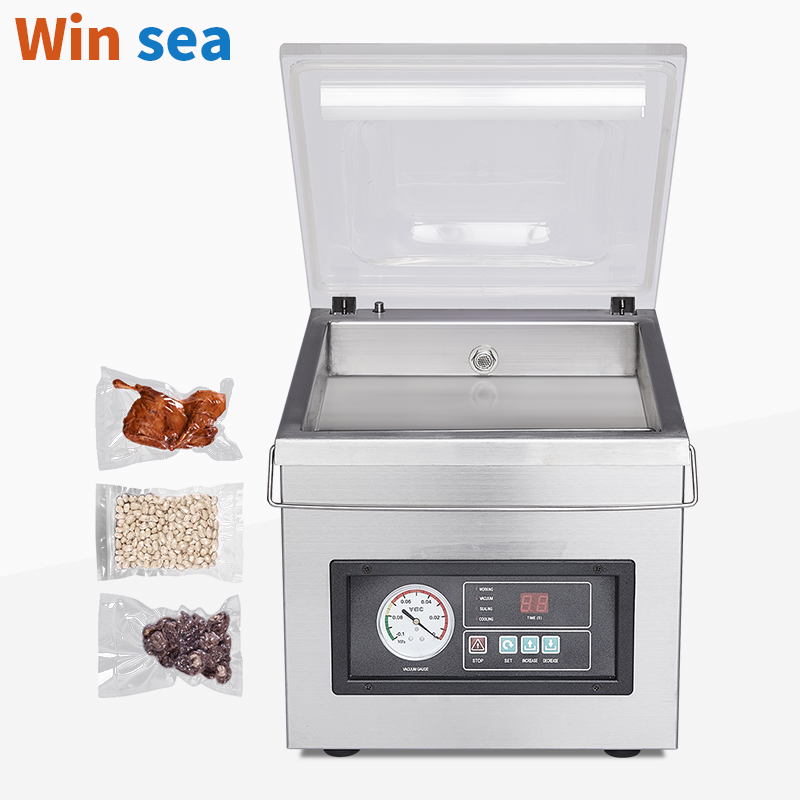
Businesses seeking to extend product shelf life often face a crucial hardware decision. Many operators default to external models during their initial evaluation stage. Buyers appreciate their highly compact footprint and significantly lower entry price compared to industrial alternatives. You can easily place these units on a standard prep table. They offer immediate access to professional-grade preservation.
However, making the wrong choice carries heavy consequences at the bottom of the funnel. Misaligning your equipment with your specific product leads directly to severe operational failures. This risk multiplies when packaging wet or high-volume goods. Liquid ingress destroys delicate pump mechanisms. Improper bags compromise seal integrity. Ultimately, poor hardware alignment results in wasted capital and ruined inventory.
This guide delivers an objective, technical breakdown of external extraction systems. We will explore exactly how these units operate under commercial stress. You will uncover their strict mechanical limitations. Finally, we provide exact shortlisting criteria. You can use this logic to determine if this solution truly fits your daily operational model.
Key Takeaways
Core Function: External machines sit outside the bag, drawing air directly from the pouch using a dry piston pump before heat-sealing.
The Consumable Catch: They absolutely require specialized, textured (channeled) vacuum bags to function; flat commercial bags will block the airflow.
The Liquid Limitation: Because they fight atmospheric pressure directly, they will aggressively suck liquids out of the bag, making them unsuitable for soups or marinades without pre-freezing.
ROI Threshold: Ideal for low-volume, dry-goods applications. Operations requiring high throughput or liquid handling must evaluate a chamber vacuum packing machine instead.
1. Core Mechanics: How an External Vacuum Sealer Operates
Understanding the engineering behind the hardware helps you avoid costly implementation mistakes. External models operate on a very specific edge-suction principle. The bulk of your packaging bag remains completely outside the machine. You only place the open edge into the designated suction slot. This slot acts as the primary sealing channel.
Air extraction dynamics rely heavily on internal motor components. The system utilizes a robust dry piston vacuum pump. Standard machines pull residual oxygen down to extremely low levels. This process immediately slows aerobic spoilage. It also prevents freezer burn effectively. Products avoid severe dehydration and oxidation during cold storage.
You must understand the strict "textured bag" requirement. External machines fail completely when you use smooth plastic bags. The physics are straightforward. The machine applies intense downward pressure during operation. This pressure clamps smooth plastic sheets together instantly. The clamped plastic seals off the pump entirely. It prevents any air from escaping. Textured bags solve this mechanical flaw. They feature micro-channels or internal ridges along the plastic. These channels allow trapped air to escape freely, even under heavy clamping force.
The standard sealing cycle follows a precise sequence of events:
The piston pump extracts ambient air from the pouch.
The system reaches a specific negative pressure threshold. This usually registers around -0.85 to -0.95 bar.
A localized heat bar activates. It applies temperatures between 150°C and 200°C to the plastic. Some units use impulse sealing, delivering a rapid heat burst for 0.5 to 2 seconds.
The heat fuses the plastic layers together permanently.
Implementation reality requires patience. Operators must allow a few seconds for the melted thermoplastic to cool. It must solidify completely before you handle the package. Rushing this step compromises the final seal integrity.
2. External vs. Chamber Vacuum Packing Machine: The BoFu Comparison
Buyers often struggle to choose between extraction methodologies. Let us compare the exact physics of extraction. An external unit sucks air directly out of the bag. Surrounding atmospheric pressure immediately squeezes the bag from the outside. This squeezing action aggressively pushes internal liquids toward the suction nozzle. You will experience messy spills when packaging wet goods.
Conversely, you must evaluate the alternative. A Chamber Vacuum Packing Machine changes the physics entirely. You place the entire bag inside a closed tub. The powerful pump extracts air from the entire chamber at once. This keeps the pressure perfectly equal inside and outside the bag. Liquids remain perfectly still. They do not boil, bubble, or spill during the cycle.
Consumable costs dictate your long-term success. External hardware requires low initial capital. However, you face extremely high ongoing operational costs. Textured bags are significantly more expensive to manufacture. The micro-channel production process drives up their price. Chamber units demand higher initial capital upfront. But they utilize standard, cheap flat bags. Long-term ROI is substantially better for high-volume users. You recover the initial hardware investment through daily consumable savings.
Throughput and cycle times heavily influence commercial viability. A standard commercial cycle takes 20 to 45 seconds. External machines face a thermal bottleneck. They often require manual cooldown periods between seals. This prevents the heat bar from overheating and melting the protective Teflon tape. Chamber machines utilize heavier thermal components. Engineers build them specifically for continuous, uninterrupted industrial cycles.
| Feature | External Extraction Models | Chamber Extraction Models |
|---|
| Air Removal Method | Direct suction from the bag opening | Evacuates the entire sealed environment |
| Bag Requirement | Textured/channeled bags only | Standard smooth flat bags |
| Liquid Handling | Poor (requires pre-freezing) | Excellent (liquids remain stable) |
| Production Pace | Intermittent (requires thermal cooldowns) | Continuous industrial cycles |
3. Operational Vulnerabilities and Implementation Risks
Hardware investments always carry operational risks. You must protect your equipment from moisture and pump damage. Dry piston pumps dominate the external machine market. Engineers design them to be virtually maintenance-free. But they possess a fatal flaw. They are highly susceptible to moisture ingress. Sucking in wet marinades ruins the internal components. Drawing blood from fresh meats causes rapid internal rust. This inevitably leads to premature equipment failure and expensive motor replacements.
Food safety remains your highest priority. You must understand the anaerobic risk. Many operators hold a dangerous misconception. They mistakenly believe vacuum sealing replaces refrigeration. This is scientifically false. Removing oxygen successfully suppresses aerobic bacteria. But it creates the perfect environment for dangerous anaerobic pathogens. Strains like Clostridium botulinum or Listeria thrive without oxygen. Temperature control remains absolutely mandatory. You must store sealed goods in strict cold-chain environments.
Physical product damage represents another vulnerability. Standard external extraction applies immense atmospheric pressure. This force will easily crush fragile items. Pastries, chips, and delicate produce will shatter under the strain.
Pro Tip for Fragile Goods: Buyers packaging delicate items must demand specific firmware. Ensure the machine features a dedicated "Pulse Function".
Mechanical Advantage: The pulse mode allows step-by-step intermittent extraction. You manually control the exact negative pressure.
Result: This precise control completely prevents physical product destruction while still removing excess air.
4. Key Specifications to Evaluate Before Purchasing
You need a rigid evaluation framework before committing capital. Pay close attention to sealing bar dimensions. The width of the thermal bar strictly dictates the maximum bag width you can process. Measure your inventory carefully. Ensure the hardware aligns perfectly with your largest product SKU. A bar that is too narrow creates severe production bottlenecks.
Construction material separates domestic toys from commercial assets. Avoid domestic plastic models for business use entirely. They crack under commercial stress. You must mandate stainless steel housing. Stainless steel meets stringent food-grade hygiene standards. It resists harsh chemical cleaning agents. It also prevents rust and long-term corrosion in damp kitchen environments.
Film permeability matches dictate your actual shelf life. The machine is only as effective as the bag you use. Different polymers offer varying barriers against oxygen. You must align your consumables with your preservation goals.
| Film Material Type | Oxygen Transmission Rate (OTR) | Best Commercial Application |
|---|
| Standard PA/PE | ~100cc/m²/24h | Short-term storage, daily prep |
| High-Barrier PVDC | <10cc/m²/24h | Medium-term cold storage |
| Premium EVOH | <1cc/m²/24h | True long-term preservation |
Do not ignore seal integrity verification. Micro-leaks destroy inventory slowly and silently. Look for hardware offering dual-seal capabilities. These models utilize two parallel wire bands. They create a redundant fail-safe against microscopic breaches. Industrial settings often verify this integrity via strict pressure decay tests. You should demand similar reliability from your tabletop units.
5. Shortlisting Logic: Is an External Machine the Right Investment?
Decision makers must rely on data, not assumptions. You need clear success criteria for external adoption. This technology fits perfectly under specific operational conditions. Evaluate your daily workflow against these exact parameters.
Success Criteria for External Adoption:
You operate at a low to moderate volume. This typically means processing under 50 seals per day.
You package exclusively dry or semi-dry solids. Ideal applications include cured meats, hard cheeses, bulk hardware, or sensitive electronics.
You face severe spatial constraints. Your facility requires a compact, tabletop, or highly portable footprint.
Knowing when to walk away saves capital. Certain operational realities demand different technology. You must disqualify external units immediately if you meet any of the following conditions.
When to Disqualify and Pivot:
Your primary menu involves liquid-heavy items. If you package soups, stews, or wet marinades daily, external extraction will fail.
You intend to use Gastronorm vacuum containers. These commercial bins require specialized chamber connections or dedicated commercial hoses.
Your total packaging volume regularly exceeds 100 units daily. The ongoing premium cost of textured bags becomes completely financially unviable over a standard 12-month fiscal projection.
If you trigger any disqualification criteria, you must pivot. An industrial Vacuum Packing Machine utilizing chamber technology will serve your operational demands much better.
Conclusion
An external vacuum packing machine serves as a highly capable entry-level preservation tool. It offers an excellent entry point for smaller operations. It trades high-volume liquid handling capabilities for extreme cost-efficiency and unmatched compactness. The dry piston technology provides reliable air extraction for dry solids.
However, successful implementation requires strict operational discipline. You must advise your internal evaluation team to audit your entire product mix immediately. Calculate the exact ratio of wet versus dry goods on your menu. Next, perform a comprehensive 6-month consumable forecast. Compare the ongoing financial impact of textured bags against standard flat bags. Complete this rigorous mathematical assessment before issuing any final purchase order.
FAQ
Q: Do I need special bags for an external vacuum sealer?
A: Yes. Because the machine clamps down on the bag during suction, you must use textured (channeled) bags to provide an escape path for the air. Smooth bags will seal shut instantly, preventing vacuuming.
Q: Can an external vacuum packing machine seal liquids?
A: Not directly. The vacuum force will suck the liquid into the pump, ruining the seal and potentially destroying the machine. Pro Tip: You must partially freeze liquid items before sealing them with an external unit.
Q: How much longer does vacuum sealing extend product shelf life?
A: Typically 3 to 5 times longer than standard storage by reducing residual oxygen to below 0.5%, suppressing 98% of aerobic spoilage microorganisms. However, strict cold-chain compliance is still required.